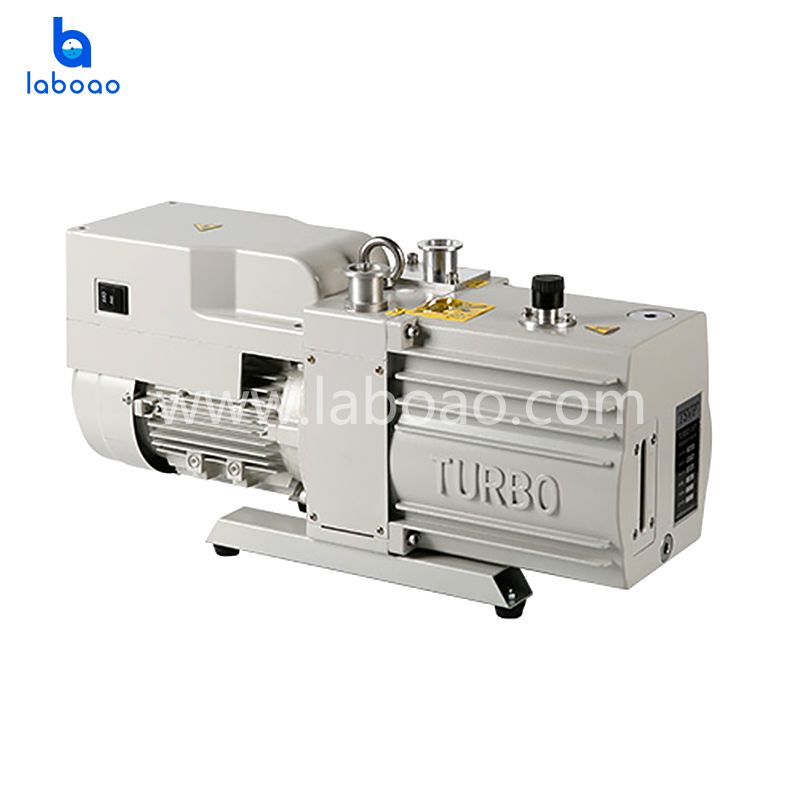
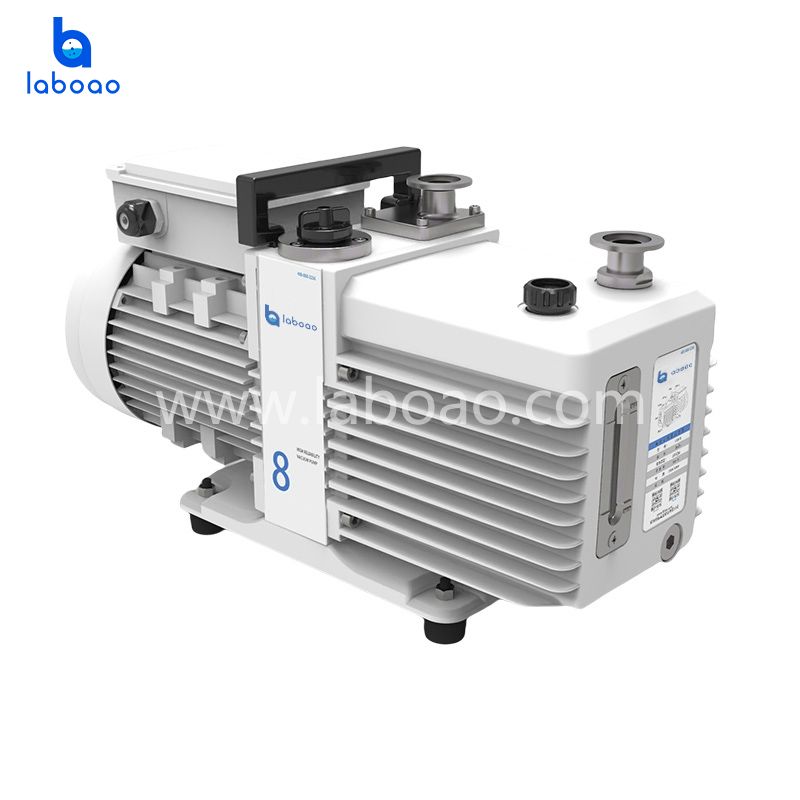
This article will introduce the relevant knowledge of vacuum pumps for freeze dryers, focusing on their working principle and classification.
I. Working Principle
The main function of a freeze dryer vacuum pump is to extract air from the freeze dryer, creating a low-pressure environment that allows water in the material to sublimate at low temperatures, achieving the drying purpose. Its principle is mainly based on the rarefaction and compression processes of gases. When gas is drawn into the vacuum pump, as the pressure decreases, the mean free path of gas molecules increases, and collisions between gas molecules decrease, thus gradually rarefactioning the gas. When the gas becomes rarefied to a certain degree, it can be expelled from the pump through compression, thus maintaining the vacuum state inside the freeze dryer.
II. Types of Vacuum Pumps
Based on their working principles and structural characteristics, freeze dryer vacuum pumps are mainly divided into oil-sealed vacuum pumps and oil-free vacuum pumps.
1. Oil-Sealed Vacuum Pumps
There are two types of oil-sealed mechanical vacuum pumps: rotary vane and slide valve. Rotary vane pumps are the most commonly used in freeze dryers. The various parts are sealed and lubricated by an oil film in the vacuum pump oil. To improve the ultimate vacuum, two pumps are generally connected in series to form a two-stage pump.
During operation, rotary vane vacuum pumps compress gas. If the gas contains a lot of water vapor, the water vapor will be compressed into small droplets and mix into the vacuum pump oil, causing emulsification of the pump oil and affecting the pump's sealing performance, thus affecting the ultimate vacuum. Therefore, oil-sealed vacuum pumps are equipped with gas ballast valves. These valves allow the compressed gas to communicate with the outside environment before the compression reaches its end, reducing the compression ratio and thus reducing the amount of water entering the vacuum pump oil. The opening degree of the gas ballast valve can be adjusted or completely closed; when the gas ballast valve is opened, the ultimate vacuum of the vacuum pump will be reduced and the consumption of vacuum pump oil will increase.
2.Oil-free Vacuum Pumps
Vacuum pumps that use a working medium within the pump chamber can contaminate the vacuum system due to the vapor molecules of the working medium evaporating and diffusing into it; this is unacceptable for pharmaceutical machinery with stringent requirements. Dry pumps, on the other hand, operate without a working medium.
Dry pump units are clean evacuation systems. The pump chamber contains no oil or other liquid media, causing no contamination to the contents of the evacuated containers; the exhaust port is free of oil mist, preventing environmental pollution; it has a strong ability to remove condensable gases such as alcohol and water vapor; and it has low maintenance costs, requiring no oiling or oil changes.