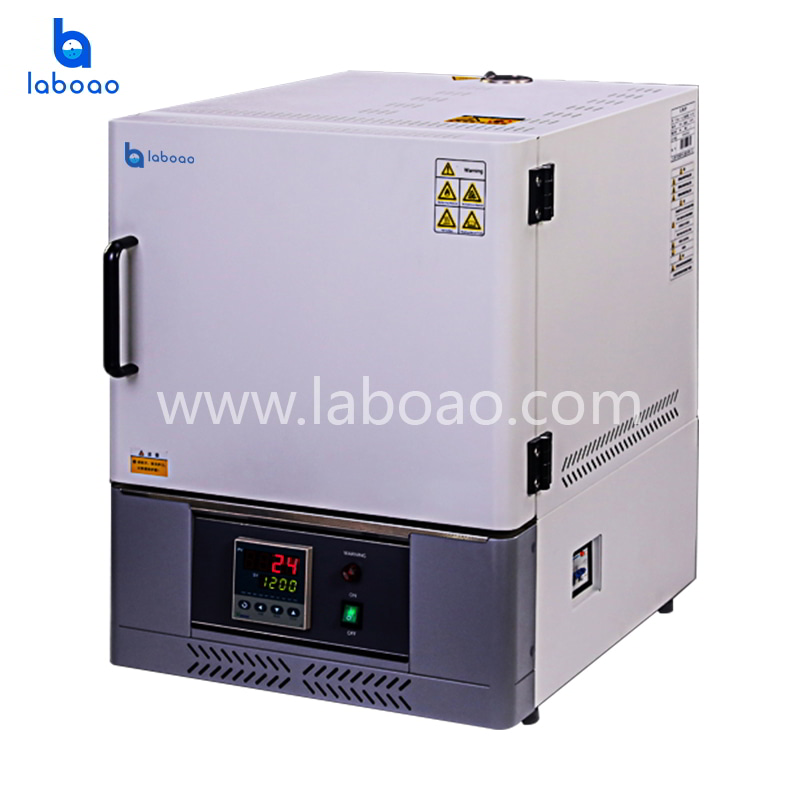
Muffle furnaces are specialized devices for high-temperature heating, ashing, and calcination. They typically offer temperature control ranges of 200–1200°C or up to 1600°C and allow for heating in either an isolated environment or an air atmosphere. Their core function is high-temperature solid-state processing, covering several major application categories:
I. Sample Ash Content Determination (Most Common)
Ash testing for food, grain, oil, and agricultural products.
Calcination at 550°C to constant weight to measure total ash, as well as water-soluble and water-insoluble ash, in order to assess impurity and mineral content.
Testing of ash and volatile matter in coal, ores, and biomass.
National standard coal quality analysis: high-temperature calcination at 815°C to determine ash yield.
Calcination residues of soil, sludge, and solid waste.
Removal of organic matter to calculate the content of inorganic residues.
Ash content in plastics, rubber, and polymers.
High-temperature incineration of organic components, followed by weighing the remaining fillers (e.g., calcium carbonate, glass fiber, metal oxides).
II. Elemental Analysis Pre-treatment: Dry digestion for sample preparation prior to heavy metal and inorganic element detection.
Plants, medicinal herbs, and food: Ashing at 500°C, dissolving the residue in acid, and analyzing for metals such as lead, cadmium, copper, and iron via Atomic Absorption Spectroscopy (AAS) or ICP.
Ores and metallurgical raw materials: High-temperature decomposition to remove organic matter and sulfides, facilitating subsequent sample dissolution and analysis.
III. Thermogravimetry and Loss-on-Ignition (LOI) Experiments (Chemical raw materials, catalysts, powder materials).
Setting temperature gradients to measure mass loss, water of crystallization, and carbonate decomposition (e.g., high-temperature decomposition of calcium carbonate into calcium oxide).
IV. Sintering and Calcination of Ceramics, Powders, and Inorganic Materials
High-temperature sintering and forming of ceramic green bodies and powders;
Catalyst calcination: preparation and high-temperature activation of alumina, molecular sieves, and metal oxide catalysts;
Calcination of nanopowders and ceramic precursors: removal of organic ligands and decomposition of nitrates to yield pure oxide powders;
High-temperature performance testing of refractory materials and glazes.
V. Metallurgy and Mineral Processing
Ore roasting: oxidative roasting of sulfide ores and decomposition of carbonate ores;
Cupellation and fire assay: gold and silver fire assay, separation of precious metals via high-temperature melting;
Metal sample annealing and tempering (small-scale laboratory heat treatment).
VI. Other Laboratory High-Temperature Applications
Glass melting and sample fusion: melting silicate samples for XRF analysis;
Removal of organic residues from crucibles and vessels: high-temperature cleaning (burn-off) of corundum and porcelain crucibles;
Educational experiments: thermal decomposition reactions (e.g., sodium bicarbonate, calcium carbonate) and high-temperature redox demonstrations;
High-temperature regeneration of activated carbon and adsorption materials (burning off adsorbed organics in an air atmosphere).
VII. Reference Operating Temperatures
General ashing: 500–550°C
Coal analysis: 815°C
Ceramic sintering and catalyst calcination: 800–1200°C
High-temperature ceramics/specialty powders: 1400–1700°C