I. Structural Components
1. Core Components
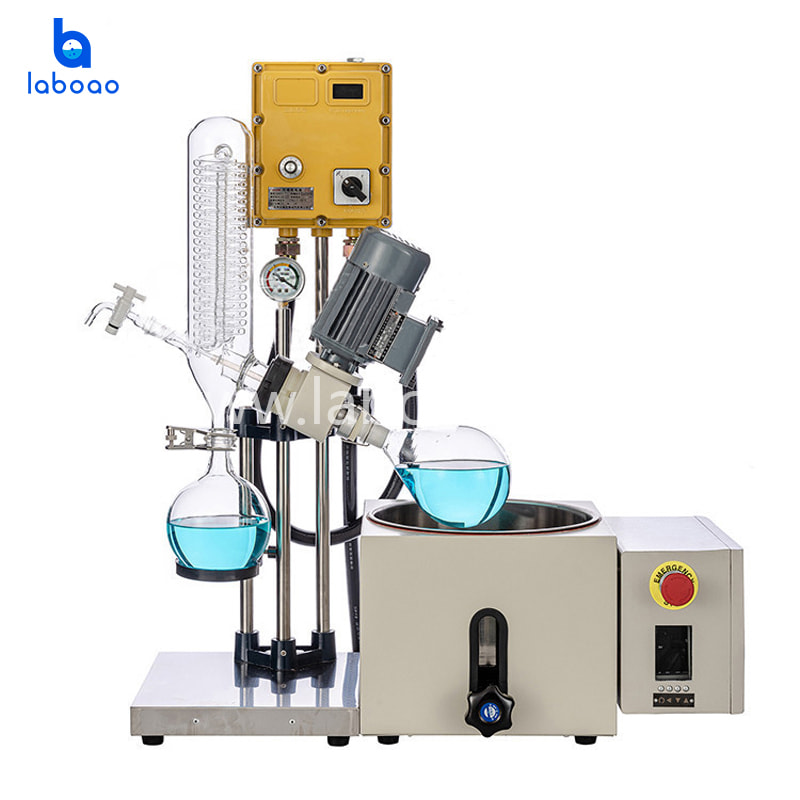
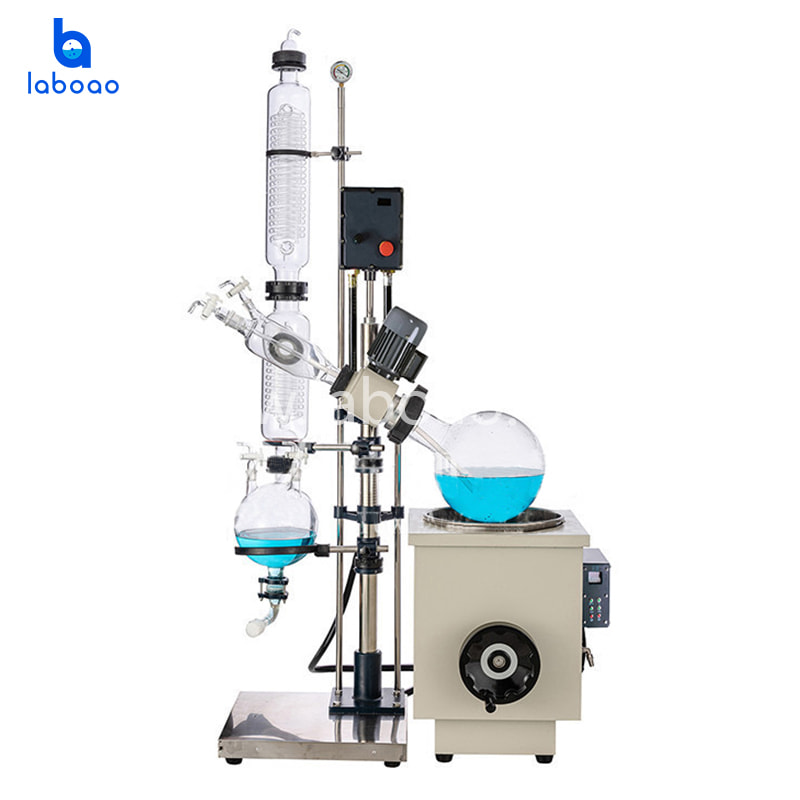
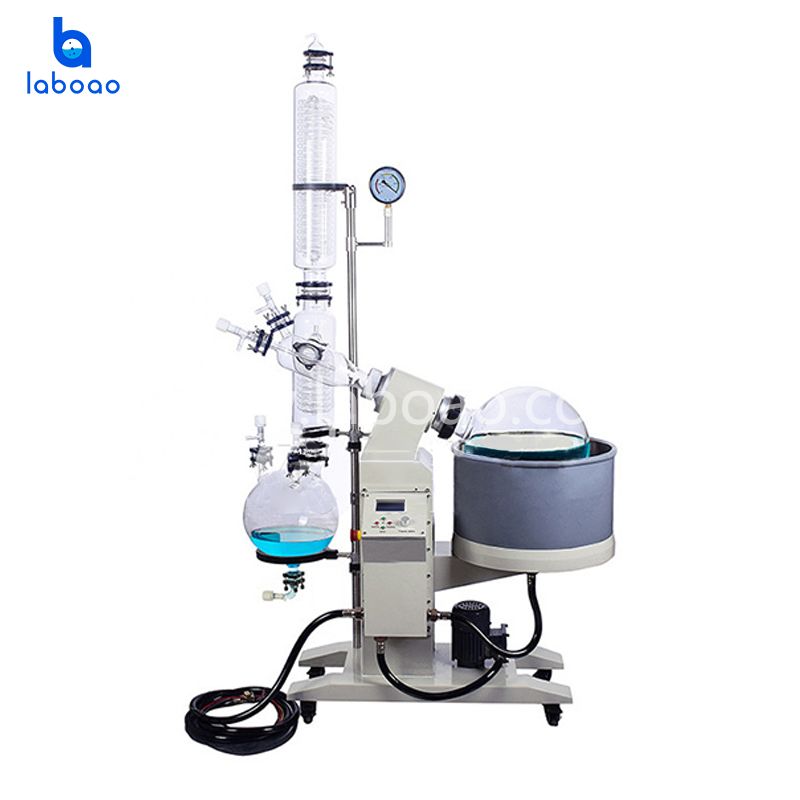
① Rotary Motor and Drive System: The drive motor rotates the evaporation flask at a constant speed, utilizing centrifugal force to spread the liquid into a thin film, thereby increasing the surface area for evaporation.
② Heating System: Typically consisting of a water bath or an electric heating plate, this system provides uniform heating via constant-temperature control (e.g., using a PT100 sensor), allowing temperatures to approach the boiling point of the solvent.
③ Vacuum System: Comprising a vacuum pump, vacuum switching valves, and connecting tubing, this system is used to lower the system pressure and facilitate solvent evaporation at lower temperatures.
④ Condenser: Features an upright, double-layered serpentine coil design; when paired with cooling water or a low-temperature medium (such as dry ice and acetone), it condenses the vapor back into liquid form.
⑤ Evaporation Flask and Receiving Flask: An eggplant-shaped or round-bottom flask serves as the evaporation vessel, featuring a standard ground-glass joint to ensure airtightness; the receiving flask is equipped with a bottom discharge port to facilitate the collection of the distilled solvent.
2. Auxiliary Components
① Sealing Structure: Utilizes a composite seal ring made of PTFE (Polytetrafluoroethylene) and rubber; when coated with vacuum grease, it ensures the maintenance of a high vacuum level.
② Lifting Mechanism: Features a design where the main unit remains stationary while the water bath is raised or lowered electrically, allowing for convenient adjustment of the evaporation flask's position.
③ Safety Features: Includes dry-burn protection (automatic power shut-off if the water level drops too low) and a vibration-damping structure (e.g., a rust-proof aluminum alloy support stand).
II. Maintenance Methods for the Rotary Evaporator
1. Routine Maintenance
① Cleaning and Inspection: After use, wipe down all glass components with a soft cloth to remove residual solvents and oil stains.
② Joint Maintenance: Apply vacuum grease to all ground-glass joints and sealing surfaces to prevent them from seizing up due to prolonged tight contact; avoid overtightening PTFE valves to prevent damage to the glass components.
③ Electrical Safety: Ensure that the motor and control panel remain dry to prevent damage caused by water ingress or moisture.
2. Routine Maintenance
① Seal Ring Cleaning: Periodically remove the seal ring to inspect the shaft for contaminants and clean it; reapply vacuum grease to maintain lubrication.
② Vacuum System Inspection: Clamp off the external vacuum tubing and observe the vacuum gauge to check for leaks; if a leak is detected, inspect the sealed joints and the rotating shaft's seal ring.
③ Motor Temperature Monitoring: During continuous operation, the surface temperature rise of the motor must remain below 45°C.
3. Operational Precautions
① Startup Sequence: First, switch on the vacuum pump to reduce pressure, then initiate rotation; when shutting down, stop the rotation first, then vent the system to atmospheric pressure to prevent the distillation flask from detaching.
② Heating Guidelines: The water bath must be filled with water *before* powering it on; dry heating (operating without water) is strictly prohibited.
③ Sample Handling: For highly volatile or flammable solvents, connect a nitrogen balloon to purge the air; for viscous samples, reduce the rotation speed and provide manual assistance to the rotation.
III. The Relationship Between Structure and Maintenance
1. The Impact of Structural Design on Maintenance
① The standardized ground-glass joints of the glass components facilitate easy disassembly and cleaning, but they must be handled with care to prevent breakage.
② While the electric lifting mechanism offers operational convenience, its mechanical components require periodic inspection to ensure proper lubrication.
2. How Maintenance Safeguards Performance
① Routine maintenance of the seal rings and vacuum system helps sustain high distillation efficiency and prevents solvent loss caused by insufficient vacuum levels.
② Correct operation of the motor and heating system extends the equipment's service life and reduces the frequency of malfunctions.