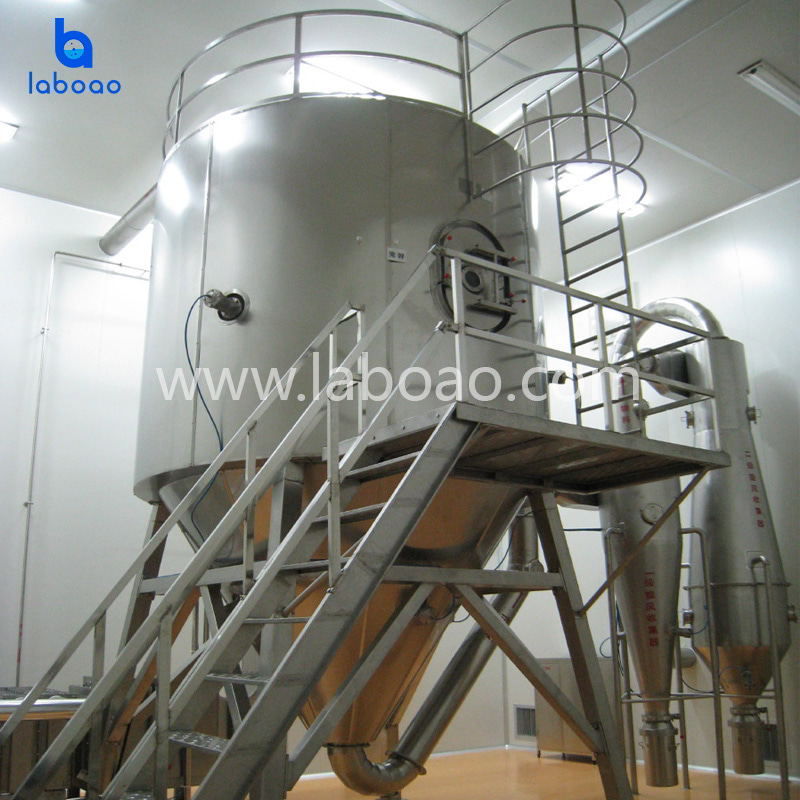
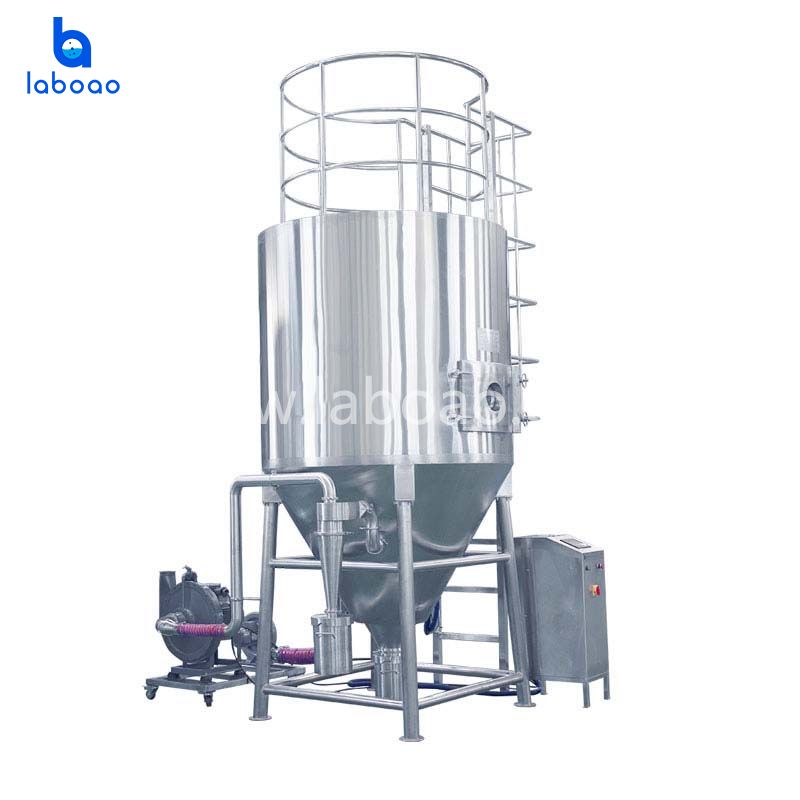
In the powder synthesis processes for lithium-battery materials, advanced ceramics, pharmaceutical intermediates, and fine chemicals, conventional open-cycle spray drying is unsuitable for materials that oxidize easily or involve organic solvent systems with low flash points. Closed-cycle spray dryers employ an inert gas as a circulating drying medium to create a fully enclosed heat and mass transfer loop. Functioning much like a powder granulation reaction chamber isolated from the atmosphere, the system integrates liquid atomization, solvent vaporization, powder collection, and solvent condensation/recovery into a single closed-loop process. By transforming liquid feedstocks into spherical dry powders within an oxygen-free or low-oxygen environment, these units ensure process safety, high powder yield, and the recovery of solvent resources—making them essential drying equipment for specialized powder engineering applications.
I. Process Mechanism and Architectural Design Logic
Closed-cycle spray dryers achieve continuous drying through a sealed, inert-gas circulation system. The system undergoes an initial air-displacement phase to ensure that internal oxygen levels remain below a specific process threshold, with nitrogen serving as the circulating heat-carrying medium. Once the liquid feedstock is dispersed into micron-sized droplets by the atomization unit, it comes into full contact with the heated inert gas inside the drying tower. Through rapid heat and mass transfer, the organic solvent vaporizes, and the droplets solidify into powder particles. An inert gas stream, carrying powder and solvent vapor, passes through a multi-stage separation system to achieve gas-solid separation. Once the powder is removed, the carrier gas enters a condensation and heat-exchange module, where the solvent vapor is cooled, liquefied, and collected. The dehumidified inert medium is then reheated and circulated back to the drying tower by a circulation fan, establishing a continuous closed-loop process. The entire system operates under a slight positive-pressure control strategy, which prevents the ingress of external air—thereby eliminating risks of oxidation, combustion, or explosion at the source—while simultaneously containing volatile organic compounds (VOCs) and enabling the recycling and reuse of the inert medium. Unlike open-cycle systems, the core of this process lies not in the discharge of hot air, but in the integrated control of carrier-gas circulation and solvent recovery.
II. Core Components and Operational Characteristics
The feed atomization unit is responsible for transporting and dispersing the liquid feed. It includes explosion-proof metering/conveyance components, filtration units, and an atomizer—available in either centrifugal or pressure-atomization configurations—which breaks the liquid feed into uniform, fine droplets, thereby determining the particle size distribution of the final powder. The atomization chamber features a sealed design, engineered to meet explosion-proof requirements for solvent-based systems.
The drying tower serves as the primary reaction space for heat and mass transfer. It is constructed as a pressure-resistant, airtight vessel, with the option to incorporate internal wall-vibration mechanisms to minimize the adhesion and buildup of fine powder. A hot-gas distributor regulates the flow field of the inert gas within the tower, optimizing the trajectory of the droplets and reducing material accumulation on the tower walls. The gas-solid separation unit employs a two-stage architecture—combining cyclone separation with precision filtration—to collect both coarse and ultrafine powders, thereby increasing the overall yield.
The condensation and recovery unit is a signature feature that distinguishes this system from conventional spray-drying equipment; it utilizes a low-temperature refrigerant to induce the phase change (liquefaction) of organic vapors, allowing for solvent recovery. The circulation and heat-exchange unit manages the transport and reheating of the inert gas, ensuring stable flow rates and temperatures throughout the closed loop. The control and safety unit integrates oxygen-level monitoring, pressure-based interlocking, over-temperature protection, and emergency-stop interlocks. It regulates oxygen concentration, temperature, and pressure within the process loop in real time, triggering protective actions whenever parameters exceed defined limits. The performance of the entire system is evaluated based on oxygen-control stability, solvent recovery rate, powder yield, particle-size uniformity, and the reliability of the system’s containment (sealing).
III. Application Scenarios and Operational Management
Closed-cycle spray dryers are designed for the continuous granulation and drying of materials—such as those containing organic solvents, substances prone to oxidation, heat-sensitive materials, or toxic compounds. They are widely used in the production of lithium-battery precursors, cemented carbide powders, pharmaceutical raw materials, nanoceramic powders, and specialty resins. During the selection phase, the system configuration—including condensation/heat-exchange capacity, oxygen-control strategy, and explosion-proof rating—must be tailored to the specific solvent type, flash point, material oxidation sensitivity, and production capacity requirements. Additionally, the atomization method should be selected to achieve the target particle-size distribution.
As a pressurized, sealed thermal-processing system, maintaining seal integrity and a stable inert atmosphere is the primary focus of operation and maintenance. Before startup, a rigorous purging (inerting) procedure must be performed; material feeding may only commence once the oxygen concentration meets the required safety threshold. During operation, system pressure, oxygen concentration, and condensation temperature must be continuously monitored to maintain a slight positive pressure. Seals, flanges, and the atomization assembly should be inspected regularly to identify and address potential leaks. Furthermore, filter media in the separation unit and powder deposits on the drying-tower walls must be cleaned to prevent static-electricity risks caused by powder accumulation. The condensation circuit—including refrigerant piping—should be checked periodically to ensure efficient solvent recovery. Shutdown procedures must follow a standardized sequence—depressurization, purging, and cooling—to prevent the sudden ingress of oxygen-containing air into the tower. For long-term shutdowns, the tower and piping should be sealed under an inert atmosphere to minimize the oxidation or degradation of any residual material on the internal surfaces.
IV. Conclusion
As a sealed powder-preparation system designed for solvent-based processes, the closed-cycle spray dryer utilizes an inert-gas loop to integrate atomization/granulation, drying/separation, solvent recovery, and atmospheric protection into a unified, comprehensive process chain. It addresses the safety limitations of open-system drying when processing flammable, explosive, or easily oxidized materials. By enabling solvent recovery and reuse, it balances powder quality, operational safety, and environmental compliance. As the fine powder industry increasingly demands tighter process containment, stricter purity control, and higher environmental standards, this equipment continues to evolve—enhancing precision in atmosphere control, improving heat-exchange efficiency, and advancing intelligent, integrated operation—to provide a stable and reliable platform for the continuous drying and granulation of specialty powders.